How Does Assisted Living Adjust Support as Your Needs Change Over Time?
Your needs can change over time. What works for you now might not be ideal in the future. That’s where assisted living comes in. In assisted living communities, you can get assistance with daily tasks and still retain as much freedom as you want. If your routines, mobility, or personal care needs change, your care plan can change with you.
This allows you to remain comfortable and confident without having to move to a new environment every time your needs change. But what does that really look like? Read on to learn how care can adapt to meet your changing needs.
How Do Assisted Living Homes Adjust Care as Your Needs Change?
Assisted living communities accommodate residents’ changing needs with periodic wellness evaluations and individualized care plans. When a senior needs a little extra help, staff members provide whatever support they need. That could mean flexible assistance with activities of daily living, medication reminders, or in-house therapy or visiting specialists. Safety features such as emergency call systems, bathrooms equipped with safety products, and ongoing health and wellness activities are also available 24/7.
Regular Assessments of Your Changing Needs
Scheduled and periodic assessments allow senior assisted living homes to monitor any changes in each resident’s physical condition, cognition, and activities of daily living (ADLs). During these evaluations, staff identify mobility levels, mealtime and medication requirements, memory concerns, communication abilities, and personal care needs such as bathing, dressing, eating, and moving around.
Both scheduled and unscheduled assessments occur when staff identify changes in a resident. Caregivers, activities directors, and nursing assistants interact with residents throughout the day and take notes when they observe anything new or different in a senior’s behavior, health, or ability to function. Additionally, residents, their family members, and physicians can notify staff of any changes in care. Based on the findings, modifications are made to each resident’s care plan.
Personalized Care Plans
A senior’s personalized care plan becomes active as soon as they join an assisted living community. This plan is tailored to the individual and revisited periodically to ensure that the care provided is exactly what the resident needs. The care plan includes routines, preferences, medical needs, and the level of staff intervention required for the resident.
If a senior’s health begins to decline or their needs change, the staff will make necessary adjustments to their plan. This could include specialized diets, exercises, and activities to help with certain behaviors. The care plan is shared with every member of the care team. From the caregivers to the nurses and kitchen staff, everyone knows each senior’s unique needs. Staff refer to the care plan to pass along necessary information when shifts change. If a resident needs more help in certain areas, the plan will reflect that, while they can still maintain independence in other areas.
Flexible ADL Assistance
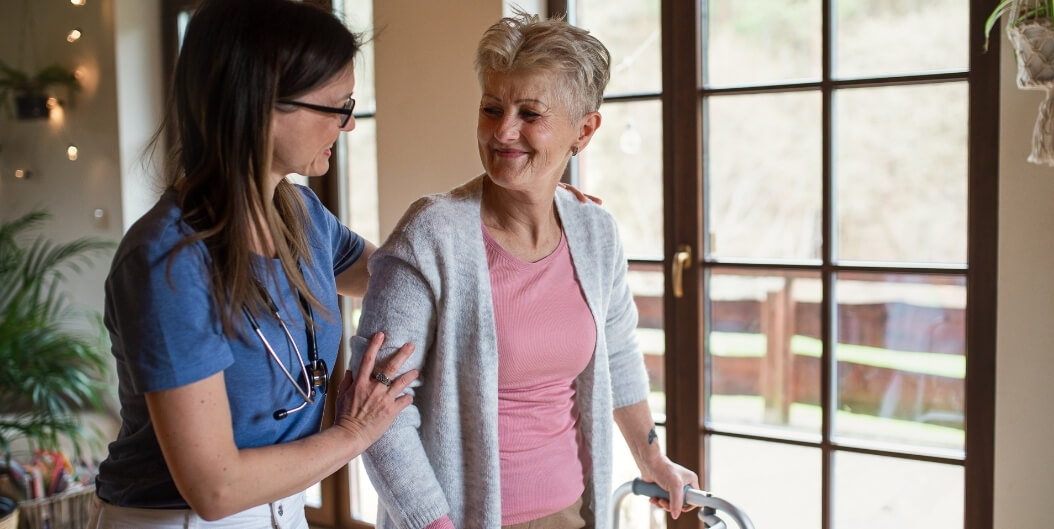
Residents receive assistance with daily activities such as bathing, dressing, grooming, toileting, and eating, with the level of support tailored to their fluctuating needs, whether short-term or long-term. For example, one resident may initially require hands-off assistance, such as having their clothes laid out for the day, and later require hands-on assistance with dressing due to decreased mobility or fine motor skills.
Caregivers offer assistance when needed but encourage residents to complete tasks independently when possible to maintain muscle strength and self-confidence.
Health and Wellness programs
An assisted living home often provides health and wellness programs that can be adjusted to suit residents with various fitness abilities. Programs may include chair yoga, resistance band exercises, memory games, brain teasers, group occupational therapy, and more. Some activities are further simplified for those who use walkers or wheelchairs and have dementia-related illnesses so that all residents can participate.
Staff may also assist residents to ensure safety during activities. Consistent movement through these programs helps maintain joint mobility, heart health, balance, and mental stimulation. Socialization combined with regular movement helps prevent falls and depression and keeps seniors independent for as long as possible.
Medication Management
Residents receive assistance with medications if their mental or physical abilities decline. Some assisted living homes offer automated medication-dispensing reminders for individuals who are still able to take their medications independently. Otherwise, medication is stored and prepared by qualified personnel and administered by either a registered nurse or a certified medication technician.
Refills are ordered and picked up by the pharmacy, drug interactions are monitored, and compliance is tracked through electronic monitoring systems. When medications require specific dosing schedules or when progressive disease processes require injections (e.g., insulin, eye medications), the medication is administered by qualified medical staff. These services help eliminate mistakes such as forgetting medications, taking two doses at once, or using improper techniques.
On-site Therapy & Specialist Visits
One way senior living supports whole-person wellness is by bringing wellness specialists closer to you. Instead of worrying about getting to your doctor’s appointment, assisted living communities will often provide therapy and doctors on-site. Physical, occupational, and speech therapists are available to work with residents in the therapy gym or even in their apartments.
Other doctors, such as podiatrists, dentists, optometrists, and primary care physicians, will visit the community to perform regular wellness exams, diagnostic testing, and other preventive screenings. Having professionals come to your community helps ensure prompt treatment if a resident’s mobility decreases or if they need rehabilitation following illness or surgery. It also allows the care manager to collaborate with these clinicians to best manage progressive illnesses.
Emergency Response Systems
One of the benefits of living in a retirement community is having access to emergency response systems. These systems can include pull cords by the bed and door, wall buttons, and wearable pendant or wristband transmitter buttons. These systems provide residents with access to a button that connects them to trained staff for assistance at any time of day or night, no matter where they are in the community building.
Modern systems even come with passive fall detection and geofencing sensors that automatically notify staff if a resident falls or wanders outside a predetermined safe area. If a resident’s risk of falling increases or they develop memory problems, care staff can increase monitoring so someone can respond if they experience a sudden illness, severe pain, or a fall.
Safety-equipped Bathrooms
Due to the high risk of falls and injuries in the bathroom, senior living communities are equipped with adjustable safety features to meet each resident’s mobility needs. Bathrooms are normally equipped with roll-in or walk-in showers, non-slip flooring, raised toilets, and secure grab bars next to the toilet and along the shower wall.
If residents require additional support, the care team can add shower chairs with padded seats, telescopic shower benches, handheld showerheads, and low-button stations for requesting assistance. These updates help residents with poor balance, arthritic pain, or weak muscles bathe safely, with or without a caregiver’s physical assistance.
Looking for Assisted Living That Adapts as Your Needs Change? Schedule a Tour at The Brennity at Melbourne.
Life happens; that’s why we tailor our senior living plans as your needs change. If you are looking for assisted living in Melbourne, Florida, that will support your changing needs, look no further than The Brennity at Melbourne. Our community offers a continuum of care to meet you or your loved one’s changing needs.
From providing simple daily assistance to graceful transitions into our memory care program, we are here to support you and your family every step of the way. Our residents benefit from individualized attention, increased safety and security, and engagement in wellness activities. Schedule a tour today to see if The Brennity at Melbourne is the right community for you.